
In just over a decade, cryptocurrency has evolved from a niche experiment into a global financial phenomenon. Bitcoin’s launch in 2009 marked the beginning of decentralized digital money, but the ecosystem has since expanded into smart contracts, decentralized finance (DeFi), non-fungible tokens (NFTs), and the broader vision of Web3. This article explores the journey of cryptocurrency, its technological milestones, challenges, and the future of digital finance.

The Genesis: Bitcoin and the First Blockchain
Bitcoin’s creation (2009): Introduced by the pseudonymous Satoshi Nakamoto, Bitcoin was designed as a peer-to-peer electronic cash system.
Blockchain innovation: The distributed ledger ensured transparency and immutability, solving the double-spending problem without banks.
Mining and proof-of-work: Bitcoin’s consensus mechanism incentivized miners to secure the network while validating transactions.
Bitcoin was revolutionary, but its scope was limited to financial transactions. The next wave of innovation expanded blockchain’s utility.
Ethereum and Smart Contracts
Ethereum launch (2015): Vitalik Buterin introduced a programmable blockchain that enabled smart contracts — self-executing agreements coded directly into the blockchain.
Decentralized applications (dApps): Developers could build platforms for lending, trading, and gaming without intermediaries.
DeFi boom: Ethereum became the backbone of decentralized finance, allowing users to borrow, lend, and earn interest without banks.
Smart contracts transformed blockchain from a financial tool into a decentralized computing platform.
The Rise of Altcoins and Specialized Blockchains
Privacy coins: Monero and Zcash emphasized anonymity.
Payment-focused coins: Ripple (XRP) targeted cross-border transactions.
Scalability solutions: Solana and Avalanche introduced faster consensus mechanisms to handle thousands of transactions per second.
Stablecoins: Tether (USDT) and USD Coin (USDC) bridged crypto with fiat, reducing volatility for traders and DeFi users.
Altcoins diversified the ecosystem, each addressing specific limitations of Bitcoin and Ethereum.
Decentralized Finance (DeFi)
Core functions: Lending, borrowing, yield farming, and decentralized exchanges (DEXs).
Advantages: Eliminates intermediaries, reduces costs, and increases accessibility.
Risks: Smart contract bugs, liquidity crises, and “rug pulls” where developers abandon projects after attracting funds.
DeFi represents the democratization of finance but also highlights the importance of robust cybersecurity and regulation.
NFTs and Digital Ownership
NFT boom (2020–2021): Non-fungible tokens allowed digital art, collectibles, and gaming assets to be uniquely owned and traded.
Beyond art: NFTs are now used in real estate, ticketing, and identity verification.
Criticism: Many argue NFTs are speculative, with inflated valuations and environmental concerns due to energy-intensive blockchains.
NFTs expanded blockchain’s cultural relevance, merging finance with creativity.
Web3: A User-Owned Internet
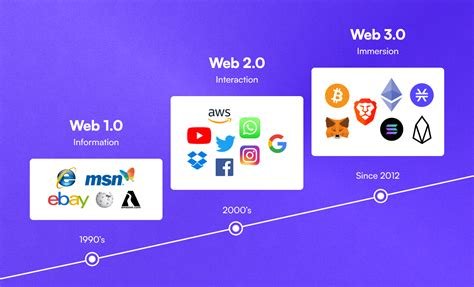
Vision of Web3: A decentralized internet where users control data, identity, and governance.
Decentralized Autonomous Organizations (DAOs): Communities govern projects collectively through token-based voting.
Interoperability: Cross-chain bridges allow assets to move between blockchains, though they remain vulnerable to hacks.
Emerging technologies: Zero-knowledge proofs enhance privacy, while decentralized identity systems reduce reliance on centralized databases.
Web3 represents the next stage of blockchain evolution, aiming to reshape not just finance but the entire digital economy.
Challenges Ahead
Regulatory uncertainty: Governments worldwide struggle to balance innovation with consumer protection.
Environmental concerns: Proof-of-work mining consumes vast energy, prompting a shift toward proof-of-stake.
Security risks: Exchange hacks, phishing scams, and smart contract exploits remain prevalent.
User education: Many investors lack awareness of risks, making them vulnerable to scams.
The Future of Cryptocurrency
Institutional adoption: Banks and corporations increasingly integrate blockchain into operations.
Central Bank Digital Currencies (CBDCs): Governments explore state-backed digital currencies to compete with crypto.
Quantum computing threat: Future-proof cryptography will be essential to secure blockchains.
Global collaboration: Developers, regulators, and users must work together to build resilient systems.
Cryptocurrency’s journey from Bitcoin to Web3 illustrates a profound shift in how we perceive money, ownership, and the internet itself. What began as a decentralized alternative to banks has grown into a vast ecosystem of financial services, cultural assets, and digital governance. The future of cryptocurrency will depend on striking a balance between innovation, regulation, and security. If successful, it could redefine global finance and empower individuals in ways traditional systems never could.
Content Us :https://cryptodaily.meeqam.com/



 Bitcoin
  Ethereum
  Tether
  XRP
XRP  BNB
BNB  USDC
USDC  Solana
  TRON
TRON  Lido Staked Ether
  Dogecoin
  Figure Heloc
  Cardano
  WhiteBIT Coin
  Bitcoin Cash
  USDS
USDS  Wrapped stETH
  LEO Token
  Hyperliquid
  Wrapped Bitcoin
  Chainlink
  Binance Bridged USDT (BNB Smart Chain)
  Canton
  Wrapped Beacon ETH
  Monero
  Ethena USDe
  Stellar
  Wrapped eETH
  USD1
USD1  Rain
Rain  Hedera
  sUSDS
sUSDS  Litecoin
  Zcash
Zcash  Coinbase Wrapped BTC
  Dai
Dai  Avalanche
  PayPal USD
  WETH
WETH  Sui
Sui  Shiba Inu
  Cronos
  USDT0
USDT0  World Liberty Financial
  Toncoin
  Polkadot
  Tether Gold
  Uniswap
  PAX Gold
  MemeCore
  Ethena Staked USDe