
The global cryptocurrency market showed modest strength on 9 March 2026, with the total market capitalization hovering around $2.33 trillion. While prices moved slightly higher, investor sentiment remains cautious due to macroeconomic uncertainty and mixed on-chain indicators. Institutional investment through crypto ETFs continues to play a major role in supporting the market.
Bitcoin (BTC) Price and Market Outlook
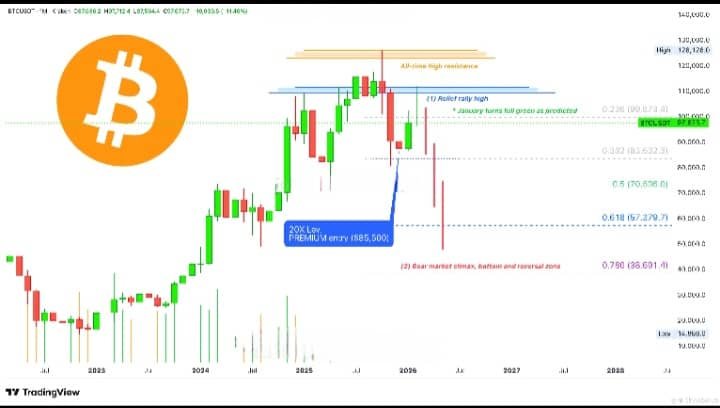
Bitcoin (BTC) is trading near $68,800, gaining about 2.45% intraday.
Last week, BTC briefly climbed above $74,000, largely driven by strong institutional demand through spot Bitcoin ETFs in the United States. On March 4, these ETFs recorded approximately $155 million in net inflows, bringing the total inflow over the past two weeks to around $1.47 billion.
Data from on-chain analytics platform Glassnode shows that roughly 57% of Bitcoin’s circulating supply is currently in profit. Historically, this level has appeared during the early stages of bear markets, which is why traders remain cautious.
Key technical levels to watch:
- Support: $66,000 – $66,600
- Resistance: $68,000 – $72,000
Crypto investment funds saw $619 million in total weekly inflows, with $521 million going into Bitcoin alone, highlighting continued institutional interest.
However, macroeconomic factors such as U.S. interest rate expectations and geopolitical tensions continue to influence market sentiment.
Ethereum (ETH) Market Analysis
Ethereum (ETH) is trading around $2,021, up roughly 4.1% on the day.
During the recent crypto rally, ETH briefly surpassed $2,150 before pulling back. On-chain data indicates that only 41.5% of Ethereum addresses are currently profitable, while 58.5% remain at a loss.
Large ETH holders appear to be reducing short-term risk. Wallets holding 1,000 ETH or more now control less than 75% of the supply, the lowest level seen in about seven months.
Another notable trend is the movement of Ethereum off exchanges. About 220,000 ETH were withdrawn recently — the largest outflow since October 2025. These transfers often suggest investors are moving assets into long-term storage or staking, rather than preparing to sell.
Institutional exposure to Ethereum is also growing. Since their launch in July 2024, U.S. spot Ethereum ETFs have accumulated approximately $12.6 billion in assets.
Ripple (XRP) Price and Legal Developments
Ripple (XRP) is trading near $1.36, gaining about 1.14%.
Despite institutional interest, XRP has struggled in 2026 and is down roughly 25% year-to-date. However, investment products tied to XRP continue attracting capital.
According to market reports, XRP exchange-traded products (ETPs) have seen around $153 million in net inflows so far this year.
Spot XRP ETFs in the U.S. have gathered approximately $1.25 billion in cumulative inflows, with total assets under management around $2.4 billion. These ETFs recently recorded five consecutive days of inflows, including $7.5 million on March 4.
Another major development is the long-running legal case between Ripple and the U.S. SEC. Ripple CEO Brad Garlinghouse announced the company plans to withdraw its cross-appeal, and the SEC is expected to drop its appeal as well. This move effectively closes one of the most important regulatory disputes in the crypto industry.
Solana (SOL) ETF Demand
Solana (SOL) is trading around $85, up about 3.55%.
Although SOL has dropped approximately 57% since mid-2025, investor interest remains strong through ETF products.
U.S. spot Solana ETFs, launched in July 2025, have already attracted roughly $1.5 billion in net inflows. Analysts estimate that about half of this capital came from institutional investors.
Recently, Solana ETFs experienced their first small outflow in about a month, totaling around $6 million, after the previous day’s $19 million inflow.
In addition to Solana, ETFs for Litecoin and XRP launched in 2025, reflecting expanding institutional access to digital assets.
The U.S. SEC introduced generic listing rules in September 2025, significantly accelerating approvals for crypto exchange-traded products. Currently, about 126 crypto ETP applications remain under review.
Market analysts expect decisions on proposed ETFs for Cardano, Polkadot, and Avalanche sometime in 2026.
Institutional Investment Trends
Institutional capital continues to flow into the crypto market.
Recent data shows that the crypto market gained roughly 0.8%, reaching $2.33 trillion, largely driven by Bitcoin demand. Interestingly, the market currently shows an 83% correlation with the Nasdaq-100, suggesting similar investor behavior between tech stocks and crypto assets.
A notable indicator of U.S. institutional buying is the Coinbase premium, which recently surged significantly.
Corporate investment also remains strong. Business intelligence firm MicroStrategy added 17,994 BTC last week, worth about $1.28 billion, at an average price near $70,946.
The company now holds approximately 738,731 BTC, purchased for around $56 billion, with an average cost of $75,862 per Bitcoin.
Investor Sentiment and Market Signals
Despite continued institutional inflows, overall market sentiment remains cautious.
According to blockchain analytics firm Santiment, large crypto investors took profits when Bitcoin reached $74,000, while retail traders tended to buy during the price dips. This pattern often appears near short-term market corrections.
Other sentiment indicators include:
- Mentions of “altcoin season” on social media are at 3–5 year lows.
- Altcoins have declined roughly 10% over the past week.
- The Crypto Fear & Greed Index remains in the Extreme Fear zone (low-20s).
Network activity metrics such as active addresses and network growth have also remained relatively flat.
External factors continue to influence the market, including geopolitical tensions in the Middle East and upcoming U.S. CPI inflation data, which could affect interest rate expectations.
Crypto Market Outlook
The cryptocurrency market is currently balancing strong institutional demand with uncertain macroeconomic conditions.
Bitcoin remains the primary driver of capital inflows, while Ethereum and newer ETF-supported altcoins continue attracting long-term investors.
In the near term, Bitcoin must break above $68,200 to restart upward momentum. If it fails to do so, analysts warn that prices could retest support around $66,600.
Future market direction will likely depend on:
- ETF investment flows
- U.S. inflation data and central bank policy
- geopolitical developments
- on-chain activity and network growth
- https://cryptodaily.meeqam.com/



 Bitcoin
  Ethereum
  Tether
  XRP
XRP  BNB
BNB  USDC
USDC  Solana
  TRON
TRON  Lido Staked Ether
  Figure Heloc
  Dogecoin
  USDS
USDS  WhiteBIT Coin
  LEO Token
  Cardano
  Wrapped stETH
  Bitcoin Cash
  Hyperliquid
  Wrapped Bitcoin
  Chainlink
  Binance Bridged USDT (BNB Smart Chain)
  Monero
  Wrapped Beacon ETH
  Ethena USDe
  Canton
  Stellar
  Wrapped eETH
  MemeCore
  Dai
Dai  sUSDS
sUSDS  USD1
USD1  Litecoin
  PayPal USD
  Coinbase Wrapped BTC
  Zcash
Zcash  Hedera
  Avalanche
  WETH
WETH  Rain
Rain  Shiba Inu
  Sui
Sui  USDT0
USDT0  Toncoin
  World Liberty Financial
  Cronos
  Bittensor
  Circle USYC
  Tether Gold
  PAX Gold
  Ethena Staked USDe