

Meta Description: Discover the ultimate guide to freelancing. Learn how to start, manage finances, build client relationships, and thrive as a freelancer with flexibility and independence.
The nine-to-five grind. The cubicle. The fixed paycheck. For decades, this was considered the standard path to professional success. But today, the world of work is evolving. Traditional corporate structures are no longer the only route to career growth. A new frontier has emerged one where your skills, passion, and self-motivation shape your path. This is the world of freelancing.
Being a freelancer means more than working independently it’s about taking control of your career. You become your own entrepreneur, marketer, accountant, and project manager. This career path offers tremendous freedom, but it also demands responsibility. Before taking the leap, it’s important to understand what freelancing truly involves and how to build a sustainable, rewarding career.
Why People Choose Freelancing
Freelancing appeals to millions for its flexibility, independence, and potential for growth. The motivation often comes down to three main benefits:
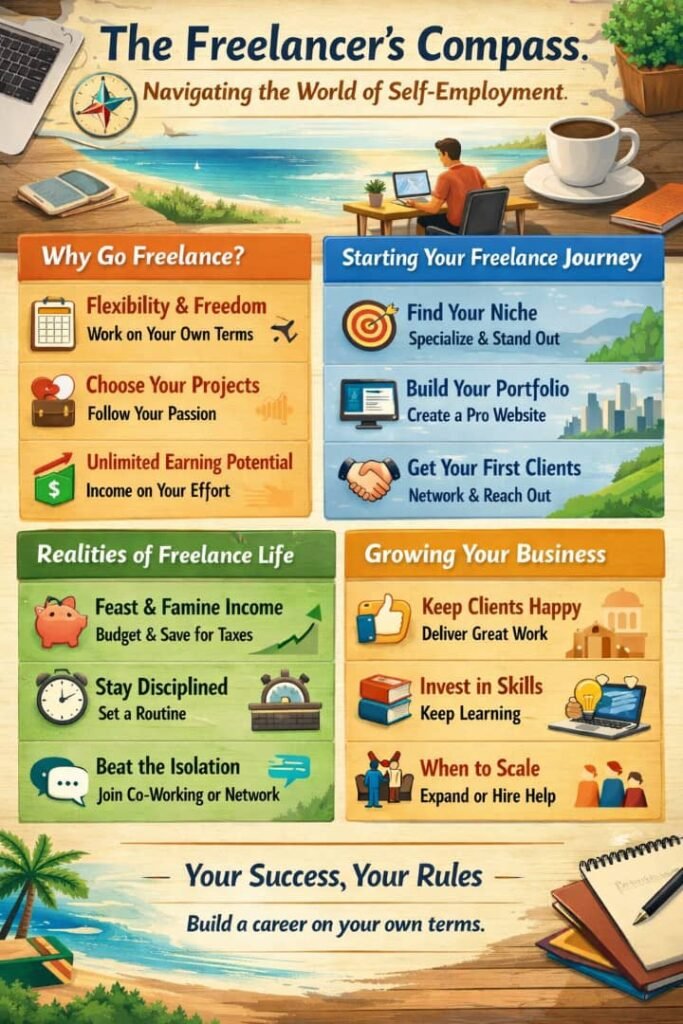
1. Flexibility and Control
Working as a freelancer allows you to structure your day around your life, not the other way around. Want to attend a midday appointment or take a Tuesday off to travel? Freelancing makes that possible. Flexibility means controlling your schedule, choosing your workspace, and balancing work with personal priorities.
2. Purpose-Driven Work
Many freelancers seek escape from the repetitive or stressful aspects of traditional jobs. Endless meetings, office politics, and rigid hierarchies can be demotivating. Freelancing lets you choose clients and projects that align with your interests and values, helping you create work that feels meaningful.
3. Income Potential Without Limits
Unlike salaried positions, freelancing offers no fixed income ceiling. Your earnings grow with your skills, reputation, and marketing efforts. Over time, you can raise your rates, take on higher-paying clients, and diversify income streams, giving you the opportunity to scale your freelance business beyond a traditional salary.
Laying the Foundation: How to Start Your Freelance Career
Transitioning from a full-time job to freelancing requires planning and preparation. Treating freelancing as a business from the start sets the foundation for success.
Define Your Niche and Brand
Many new freelancers make the mistake of trying to serve everyone. Specialization increases demand and allows you to charge higher rates. Are you a content writer or a B2B tech copywriter? A general graphic designer or a minimalist brand logo expert? Clear positioning makes you memorable to clients and builds credibility.
Build Your Infrastructure
Create a professional online presence through a clean portfolio website showcasing your best work. Set up the legal and financial structure of your business, including a separate bank account and pricing model. Decide whether to charge hourly or project-based rates and research industry standards to price your services appropriately.
Finding Your First Clients
Getting initial clients can feel challenging. Start by leveraging your existing network friends, family, and former colleagues. Platforms like Upwork and Fiverr are options, but they are competitive. The most sustainable approach is building relationships directly through LinkedIn or professional networking.
Navigating the Challenges of Freelancing
Freelancing offers freedom but comes with unique challenges. Success depends on mindset, financial management, and personal discipline.
Managing Financial Uncertainty
Unlike a regular paycheck, freelance income can fluctuate. Some months are busy, others slow. It’s crucial to budget carefully, save for taxes, and maintain an emergency fund to handle periods of low work.
Building Discipline and Structure
Without a boss, procrastination can stall your career. Establish daily routines, set dedicated workspaces, and use productivity techniques like the Pomodoro method. Clearly separating “work” from “personal life” is key to maintaining balance.
Combating Isolation
Freelancing can be lonely. Office camaraderie disappears, but isolation can be mitigated. Join co-working spaces, attend industry events, or schedule regular virtual or in-person meetings with other freelancers.
Growing a Sustainable Freelance Career
Long-term success requires strategic growth, continuous learning, and client management.
Prioritize Client Relationships
Repeat clients and referrals are the lifeblood of freelancing. Always deliver high-quality work on time and maintain proactive communication. Exceptional freelancers are reliable, responsive, and enjoyable to work with.
Invest in Professional Development
Your skills are your business. Stay updated with new tools, industry trends, and complementary skills. Continuous learning keeps you competitive and allows you to offer more value to clients.
Know When to Scale
As demand increases, you face two choices: raise your rates or expand your team. Subcontracting or hiring transforms your freelance business into a scalable operation, enabling growth beyond your personal capacity.
Final Thoughts
Freelancing is not a shortcut to freedom it is a career that demands discipline, strategy, and resilience. Success comes to those who take control of their destiny, invest in their skills, and continuously adapt. For those willing to embrace the challenges, freelancing offers autonomy, flexibility, and the satisfaction of building a career entirely on your own terms.



 Bitcoin
  Ethereum
  Tether
  XRP
XRP  BNB
BNB  USDC
USDC  Solana
  TRON
TRON  Lido Staked Ether
  Figure Heloc
  Dogecoin
  USDS
USDS  WhiteBIT Coin
  LEO Token
  Cardano
  Wrapped stETH
  Bitcoin Cash
  Hyperliquid
  Wrapped Bitcoin
  Chainlink
  Binance Bridged USDT (BNB Smart Chain)
  Monero
  Wrapped Beacon ETH
  Ethena USDe
  Canton
  Stellar
  Wrapped eETH
  MemeCore
  Dai
Dai  sUSDS
sUSDS  USD1
USD1  PayPal USD
  Litecoin
  Coinbase Wrapped BTC
  Zcash
Zcash  Hedera
  Avalanche
  WETH
WETH  Rain
Rain  Shiba Inu
  Sui
Sui  USDT0
USDT0  World Liberty Financial
  Toncoin
  Cronos
  Bittensor
  Circle USYC
  Tether Gold
  PAX Gold
  Ethena Staked USDe