
Good morning! It’s Saturday, March 14, and the crypto market is sending mixed signals after a week full of interesting developments. Bitcoin is struggling around an important price level, Ethereum is facing some short-term pressure, and institutional investors remain active through ETFs. Here’s a quick breakdown of what’s happening across the market.
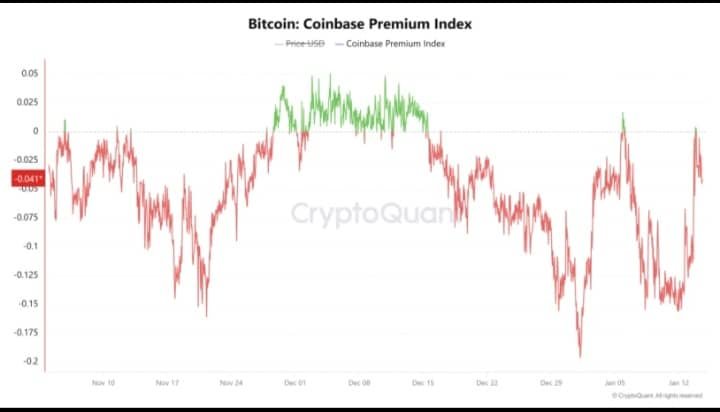
Bitcoin: A Critical Moment for the Trend
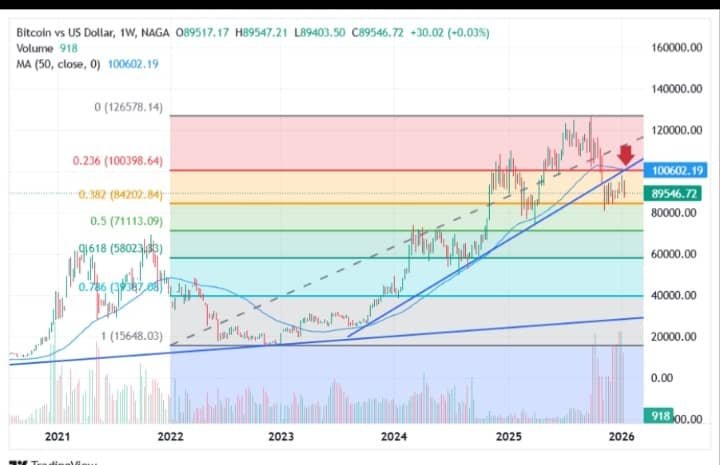
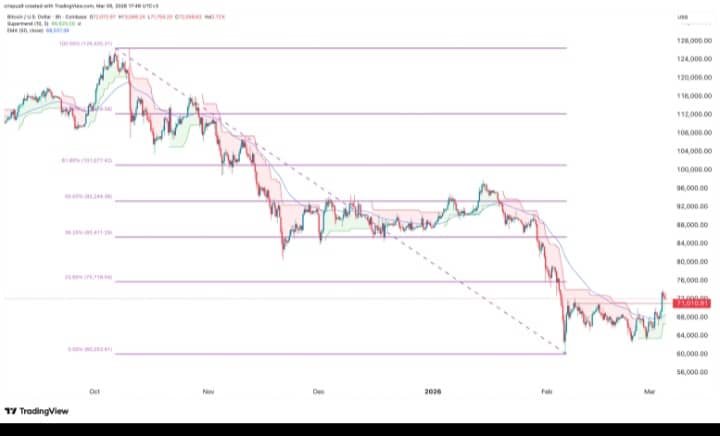
Bitcoin is currently stuck between two important price zones, creating a tug-of-war between buyers and sellers.
After getting rejected near $74,500, analysts from Glassnode say Bitcoin is trading between two key on-chain levels. The first is the realized price at about $54,400, which represents the average purchase price of all coins in circulation. The second is the true market mean around $78,000, reflecting the cost basis of actively traded coins.
This range is shaping the short-term outlook.
The bullish scenario:
If buyers manage to push BTC above $74,500 and turn that level into support, it could confirm a bullish ascending triangle pattern. In that case, analysts believe Bitcoin could target around $84,000.
The bearish scenario:
If selling pressure increases and Bitcoin falls below the current trend line, the next support zone could appear between $62,500 and $60,000.
Even with the choppy price movement, institutional demand hasn’t slowed down. Spot Bitcoin ETFs recorded their third straight day of inflows, adding roughly $115 million, led by funds managed by BlackRock.
Ethereum: Momentum Slows
Ethereum is having a more difficult week.
The price has struggled to stay above $2,100, and derivatives markets show traders becoming more cautious. Funding rates for Ether futures briefly turned negative, suggesting that more traders are betting on short-term downside.
Institutional flows reflect this uncertainty.
ETF activity:
Ethereum ETFs experienced about $225 million in outflows last week, although there were $57 million in inflows mid-week, showing that investor sentiment remains divided.
Network activity:
Ethereum’s base-layer fee revenue has also dropped significantly. Weekly fees have fallen to around $2.3 million, compared with about $8 million in February, as more activity shifts toward Layer-2 networks.
XRP: Institutional Interest or Trading Activity?
XRP attracted attention this week after reports surfaced that Goldman Sachs holds roughly $154 million worth of XRP ETF shares.
At first, many investors interpreted this as a strong endorsement of XRP. However, James Seyffart from Bloomberg Intelligence clarified that the situation may be less dramatic.
According to Seyffart, the holdings are likely related to trading desk operations, such as market-making or fulfilling client orders, rather than a long-term investment strategy by the bank.
On the technical side, XRP has managed to climb above its 20-day EMA near $1.39, but it now faces strong resistance at the 50-day SMA around $1.49.
Solana: Building Momentum
Solana is showing early signs of recovery after weeks of sideways trading.
SOL is currently trading around $89, up roughly 2.5% on the day, and several technical indicators are starting to turn positive.
The SuperTrend indicator has flipped bullish, and the MACD indicator is approaching a potential bullish crossover.
If Solana can hold above $88, analysts say the next important target could be the psychological $100 level.
Looking at a broader timeframe, SOL is still moving within a wide range between $76 and $95. A breakout above $95 could potentially open the path toward $117.
Regulation Watch: Debate Around the “Clarity Act”
Regulation continues to be an important factor shaping the crypto market.
Charles Hoskinson, the founder of Cardano, recently raised concerns about the proposed Clarity Act in the United States. The bill aims to establish clearer rules for determining whether digital assets should be classified as commodities or securities.
Hoskinson argues that under the current draft, XRP could automatically be labeled a security. One of the proposed requirements is that no single entity should control more than 20% of a token’s supply for it to qualify as decentralized enough to be treated as a commodity.
Currently, Ripple still controls over 30% of XRP’s supply, most of which is locked in escrow. That situation could complicate XRP’s regulatory status if the law moves forward.



 Bitcoin
  Ethereum
  Tether
  XRP
XRP  BNB
BNB  USDC
USDC  Solana
  TRON
TRON  Lido Staked Ether
  Figure Heloc
  Dogecoin
  USDS
USDS  WhiteBIT Coin
  LEO Token
  Cardano
  Wrapped stETH
  Bitcoin Cash
  Hyperliquid
  Wrapped Bitcoin
  Chainlink
  Binance Bridged USDT (BNB Smart Chain)
  Monero
  Wrapped Beacon ETH
  Ethena USDe
  Canton
  Stellar
  Wrapped eETH
  MemeCore
  Dai
Dai  sUSDS
sUSDS  USD1
USD1  PayPal USD
  Litecoin
  Coinbase Wrapped BTC
  Zcash
Zcash  Hedera
  Avalanche
  WETH
WETH  Rain
Rain  Shiba Inu
  Sui
Sui  USDT0
USDT0  Toncoin
  World Liberty Financial
  Cronos
  Bittensor
  Circle USYC
  Tether Gold
  PAX Gold
  Ethena Staked USDe